Easy Gluten-Free Pie Crust (Dairy-Free)
Total Time: 30 minutes
Yield: 1 pie crust
Ingredients:
2 cups gluten-free all-purpose flour + more for dusting
3/4 teaspoon xanthan gum (omit if your flour blend already includes it)
2 tablespoons light brown sugar
1/2 cup coconut oil, chilled and solid
1 egg, beaten
2/3 cup ice water, amount necessary
Directions:
Whisk Flour and Sugar: In a large mixing bowl, whisk the gluten-free flour and sugar until fully combined.
Cut Coconut Oil into Flour: Add chilled coconut oil and cut the coconut oil into the flour (either with a pastry cutter, two knives, or use the back of a fork to press the coconut oil into the flour). You’ll get an off-white crumbly mixture with the texture of coarse sand.
Add Egg: Add the beaten egg and mix well. The mixture will still be crumbly, but will be slightly pale yellow now.
Prepare the Dough: Add cold water 1 tablespoon at a time, mixing with a spoon until you get a dough that holds together (better to have a dough that’s a little too moist than too dry).
Roll out Dough: Shape dough into a disc and then roll out the dough between two pieces of parchment paper until the dough is slightly larger than your pie tin.
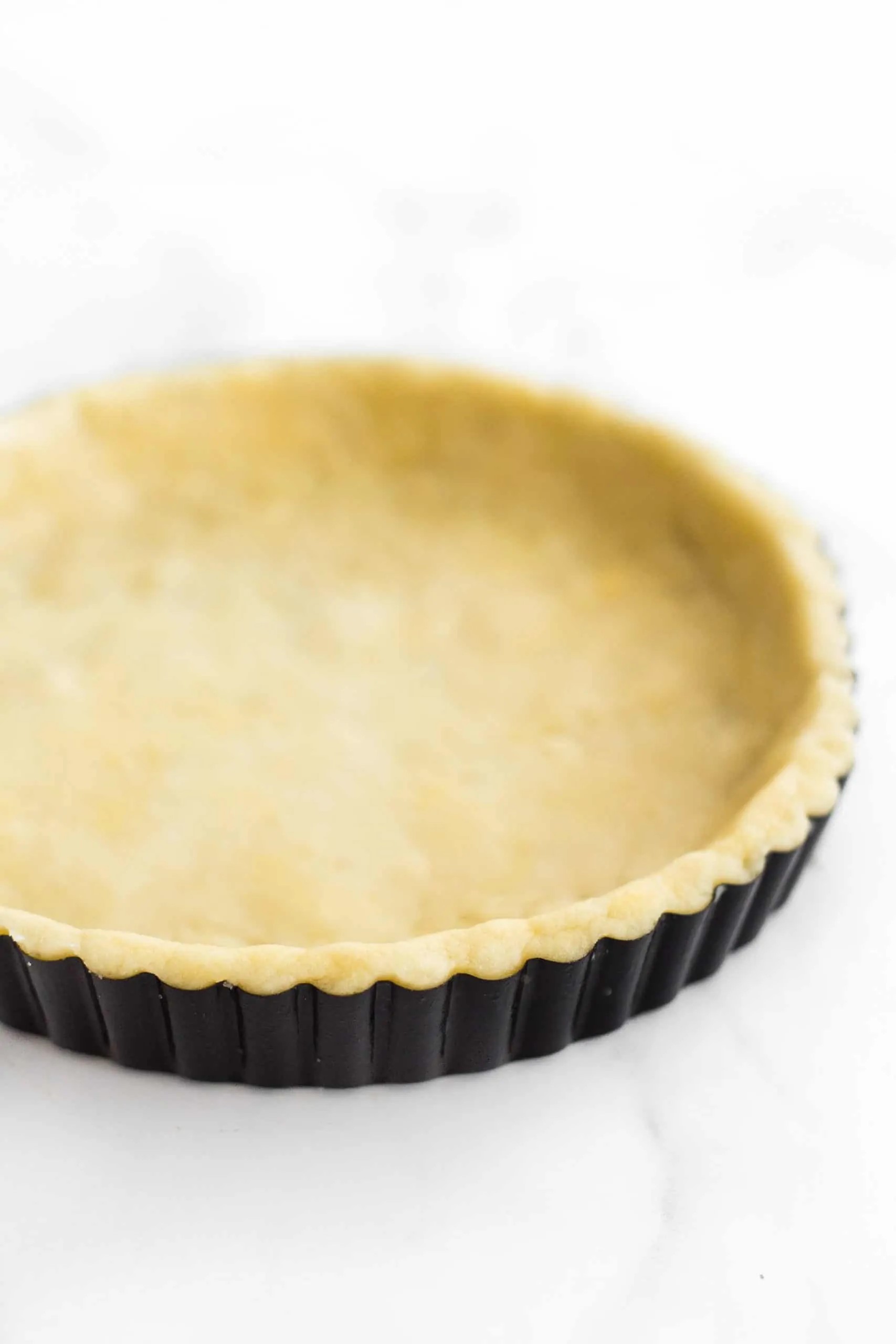
Press Dough into Pie Tin: Remove the top parchment paper and then place your hand below the bottom piece of parchment to flip the dough onto your pie tin, then slowly peel off the remaining parchment paper as you press the dough into the tin. Note that the dough may break, but don’t worry, as you can easily press the dough back into place (it will still look beautiful once baked).
Notes:
Gluten-free All-Purpose Flour Blend: I recommend that you use a gluten-free flour blend made with lighter flours or starches such as white rice flour, corn starch, or tapioca starch. I do NOT recommend a gluten-free flour blend that includes denser flours such as garbanzo bean flour.
Xanthan Gum: Xanthan gum is a replacement for gluten in gluten-free flours, and it is necessary to help the ingredients bind together properly. Make sure you add xanthan gum if your flour blend does not already include it.
Sugar: I used light brown sugar in this recipe, but you can also use white sugar, cane sugar, dark brown sugar, or coconut sugar if you prefer. If you are diabetic or insulin-resistant, I highly recommend that you use granulated monkfruit sweetener (a 1:1 substitute for normal sugar), or you can leave out the sugar completely.
Coconut Oil: I prefer using refined coconut oil in my cooking as it has a more neutral taste compared to extra virgin coconut oil. You may also use dairy-free butter (vegan butter) if you prefer. Alternatively, if you are not lactose-intolerant, feel free to use chilled butter in equal amounts. You can also use chilled vegetable shortening. I do NOT recommend substituting coconut oil for other vegetable oils that do not solidify when chilled as you need the coconut oil to be solid when cutting it into the flour. Alternatively, if you are not lactose-intolerant, feel free to use cold butter instead.
Egg: The egg is necessary as a binder for the dough. I personally have not tried making this pie crust dough using an egg-substitute or egg-replacer, so I don’t know if it will work without the egg.
Ice Water: It’s important that the water is cold when you use it to keep the coconut oil solid. This will help make the crust flaky. (Depending on the humidity of where you live and the type of flour blend used, you may not need to use all the ice water. Add 1 tablespoon of water at a time, mixing until you get a dough that holds together).
Savory Pie Crust: If you plan on using the crust for a savory pie, simply leave out the sugar and add 1/2 teaspoon of salt instead.
Pie Tin: I like using a 9-inch pie tin with a removable bottom, as it makes removing the entire pie from the tin much easier. The ridges of the pie tin also make it easier to shape the edges of the pie crust (all you need to do is press the crust into the tin’s edges, no need for any fancy techniques)!
To Par-Bake the Crust: I recommend par-baking the crust for 10 to 15 minutes at 425°F to firm it up slightly before filling it.
To Pre-Bake the Crust: If you are making this pie crust for a recipe that calls for a fully-baked pie crust, simply brush the exposed edges with egg wash, and then bake the crust for 30 minutes at 425°F until the crust is firm and the edges are golden brown. The baked crust will keep for up to 5 days in the refrigerator.
Freezing the Pie Crust: If you don’t plan on baking this gluten-free, dairy-free crust immediately, simply cover the crust with plastic wrap and then cover the whole pie tin with aluminium foil. The crust can be frozen for up to 2 months. When ready to bake the crust, remove the plastic wrap and foil and let the crust thaw at room temperature for 15 minutes while preheating the oven.
The Secret to Perfect Flaky Pie Crust:
I remember learning how to make pie crust in my cooking class a long time ago, before we started eating gluten-free, and one thing my professor, Pelusa Molina, told us was that we had to cut the chilled butter into the flour.
The reason for “cutting in” the solid butter into the flour is to create a flaky texture, which is developed as small chunks of butter remain in the flour, keeping the butter separate from the dry ingredients when baked, and this is what creates the flaky texture.
In this case, we’re making a gluten-free and dairy-free pie crust, so I’m using chilled coconut oil instead of butter (you could also use chilled palm shortening). It’s highly important that the oil or shortening or butter you are using is chilled and hard, so that you can cut into it without it melting.
Recipe FAQs:
Can I Bake the Pie Crust in Advance?
If you are making this pie crust for a recipe that calls for a fully-baked pie crust, brush the exposed edges with egg wash, then bake the crust for 30 minutes at 425°F until the crust is firm and the edges are golden brown. The baked crust will keep for up to 5 days in the fridge. You may also par-bake the crust for 10 to 15 minutes before pouring in the pie filling and then continue to bake the entire pie (filling included).
Can You Freeze the Gluten-Free Pie Crust?
Yes, you can freeze the gluten-free pie dough if you are not planning on baking it immediately. Simply cover the crust with plastic wrap, and then cover the whole pie tin with aluminium foil. Store the crust dough in the freezer for up to 2 months. When ready to bake your pie crust, remove the plastic wrap and foil, and then let the dough thaw for 15 minutes at room temperature while you preheat the oven.

Recipe courtesy of Gluten-free Dish by Dish.com