Spells8 Book Club Reviews Masterlist - Sessions 26+

Book Title and Author: Women of the Dawn by Bunny McBride

Status? : Finished

My overall rating of the book : 10/10

How does this book relate to my magickal practice?: As a witch with a region-based practice, this book is a collection of historical accounts of four Abenaki women in Maine who lived from the late 1700s to the 1970s. Their stories all connect in one way or another, and reading about the places they lived, where they travelled, and how they lived with the land is inspiring in more ways than one. Several of the places mentioned in the book are all within a day’s trip for me, and I think I’d like to take a few days this summer and explore some of them, both to get out and explore, but also to honor the Indigenous Women who walked this land before me.

My personal thoughts/opinions: Okay, so I had already typed this all out in a conversation with someone else, so I’m just going to copy/paste it under a read-more because it got kind of long :laughing:

rambly thoughts on the book here

It’s hard to describe how the book is written and how everything connects together, but the fact that it’s about four women all named Molly is just the first step of that connection. Each one before Molly Dellis, the narrator of the book, has something to teach her as she researches and learns about their lives.

  • Molly Mathilde (1665-1717): The daughter of a great Wabanaki chief, her husband was a French man who helped bond the French settlers with the Wabanaki people of her tribe. The town of Castine, Maine, bears his name. (This place is about an hour and a half from me.)

  • Molly Ockett (1740-1816): A healer by nature, Molly Ockett found herself trapped between her rage and her better nature. She mentioned several times in her journals that it boosted her confidence to know that the people responsible for the loss of her people’s independence were dependent on her for their care. She successfully lived as traditionally as she could during the period of colonization because of the relationships she built with white settlers who became dependent on her medicine and healing. She is buried in the Woodlawn Cemetery in Andover, Maine. There are even local signposts that show locations she is associated with, like Molly Ockett’s Cave. (This place is about two hours from me on the border of Maine and New Hampshire.)

  • Molly Molasses (1775-1867): Later in life, Molly Molasses was the picture of the stubborn, grouchy old woman. She had what the Wabenaki called m’teoulin – magic. In her younger days, she earned a living by traditional Indigenous crafts, such as baskets and weaving. She refused to give up her nomadic life, continuing to move about until she was in her 90s and could no longer move. Like Molly Ockett, Molly Molasses struggled with the white settlers and their contradictions. She said that “the enemy seemed to have two faces: one cold and selfish, the other kind and helpful”, and she defied every role that was placed on her until she died. She lived and died in Bangor, Maine, somewhere that I’ve been to many times and actually have to travel to frequently for my daughter’s orthodontist appointments. The pictures I shared in Fun Friday are actually from Bangor. Now, I just need to find her grave, or somewhere associated with her.

  • Molly Dellis (1903-1977): Molly Dellis (also known as Molly Nelson) is the “main character” of the book. She gathered information about the other three women, searching for connection with her ancestors through their stories. It’s so fascinating how their stories all connect and are similar in different ways. Molly Dellis was a dancer in New York, and her stage name was Molly Spotted Elk. She married a French man and her story aligns a lot with Molly Mathilde in that respect. She lived on Indian Island, the reservation north of Bangor, and is buried there.

Anyway, there are places I’ve been inspired to visit now, thanks to these women. Sorry, I geeked out and just kept writing
 :laughing:

And I learned while searching for the links and stuff to put here that not only did Molly Molasses know Henry David Thoreau, he actually wrote quite extensively about her and other topics regarding the Maine wilderness! :open_mouth: There’s this one here, so now I know what else I’ll be reading soon lol

An interesting quote from the book: There was one section in particular that I found interesting, and though it’s just one quote, the sentiment is echoed by each of the women in various forms.

Tufts was not the only person to make demands of Molly Ockett. On one occasion, a destitute settler from Fryeburg came to her Bethel camp to ask for a loan. After scolding him for trying to borrow from “a poor Indian despised by white people,” she gave him eight pounds - a considerable sum in those days – and made him promise to return the next winter to hunt furs in order to repay her. This he did, in contrast to many less fair-minded folk. Time and again, Molly Ockett tried to call up the balance of give and take, but almost invariably settlers focused only on their own needs. They wanted her to see their plight and relieve their pain, yet they turned a blind eye to the fact that her way of life was unraveling right in front of them. As they saw it, it was her job to adjust to them and their habits. Remarkably, however much anger or frustration she felt toward colonists who pursued their own happiness at the expense of her people, she repeatedly acted on their behalf as a healer and even a peacemaker.

my note on this passage

It’s interesting to see that this is mentioned here because I also always go back to this idea of reciprocity. There’s a give-and-take that is necessary in nature, and one of the complaints of Christianity, when it was being imposed on Indigenous peoples, at least from my perspective, was the fact that there is no reciprocity. The white settlers and the colonists were very selfish and that is the kind of idea that has continued in the Western world. And it has, in my opinion, led us to where we are now, with capitalism and consumption and not caring about the land we live on or the other people that live here with us.

Although reluctant to entrust themselves to someone who was not only Indian but Catholic, frontier folk often found that Molly Ockett was their only source of help. They may have missed the irony of this, but Molly did not: the individuals asking her to cure them were related to the very people who had earned bounties for killing and scalping her relatives and friends; the descendants of those who had brought epidemics to her people now asked her to heal them of diseases. How should she, who had lost so much, respond to a call for help from those who had done the taking? Focused on survival, Molly Ockett had little space for contemplating the dilemma of revenge versus forgiveness. She was a pragmatist and understood that doctoring provided a means of supporting herself and her daughter. Yet there were times when human suffering worked on her heart, and she could not help seeing her common humanity even with those who had attacked her people. Grace overcame her in these moments - as it did when she attended and cured the wife of John Evans, a former scalp hunter.

my note on this passage

I’m not sure if could reconcile with what Molly is dealing with. Having to treat the people who harmed her people must have been extremely conflicting, even if she saw their shared humanity and gave them grace.

All in all, would I recommend this book?: Yes - with the caveat that it is very regional, but if the topic is something you find interesting and want to learn about, then I fully recommend it.

6 Likes

Book Title and Author:
https://www.simonandschuster.com/books/The-Book-of-Signs/Mystic-Michaela/9781507223970

I obtained this book in the mail last night and read it while I was awake for the full moon. It was a quick and easy read, as most of it is a dictionary of symbolism. Each symbol comes with a translation of the message, positive use in personal life, and suggestions of things to do to incorporate it.

Rating:
8/10

Many more things could have been added, but then the book could easily have ended up 600+ pages!

I like how it fits in my hand. Some reference books can be so big as to require a table to put them on while reading. A simple reference book is more likely to move with me, and I am more likely to refer to it than to flip pages for some arcane info in something more complex.

How does this book relate to my magickal practice?

I see many signs around me all the time. I’m aware that they are messages, but I don’t always get the gist of the message right away. This is a good starter book of symbols to get the juices flowing on translating the daily or special messages in life.

The author frames the signs as though from those who have passed over the rainbow bridge. However, the messages can be from the deities or spirit guides as well, in real life or from dreams

All in all, would I recommend this book?
Yes. I will hang onto it like a bird book to refer to when symbols appear in the wild. It won’t be with me every minute, but signs in the wild are usually remembered when I return home after the experience, like that half remembered flash of color or enchanting warble which appears when I least expect it.

7 Likes

Book Title and Author: The Untamed Witch by Lidia Pradas

Status? : Finished

My overall rating of the book : 7/10

How does this book relate to my magickal practice?: I wanted to get in touch with my magic more, and hoped this book would do it.

My personal thoughts/opinions: This book was enjoyable while reading, and had some good exercises. But to tell the truth, I finished it just a few days ago, and can’t remember much about it. It didn’t touch anything within me, if that makes sense. But it was good and has many good points about the Self, Gods and Spirits, and Ethics. But yeah, it was nothing I hadn’t read before.

An interesting quote from the book: “Magick resides inside you. It is inherent to you, and nobody can take it from you. That also means you are the only person who can tap into your magick and use it. In the journey presented in this book, you have learned to connect with all aspects of the trinity of mind, soul, and body; understand other realms; and connect with your surroundings and sacred spaces. Now is the time to put it all together, claim your power, and experiment with it yourself.”

Pradas, Lidia. The Untamed Witch: Reclaim Your Instincts. Rewild Your Craft. Create Your Most Powerful Magick. (p. 229). Fair Winds Press. Kindle Edition.

All in all, would I recommend this book?: Yes, if you’re new to the craft. But if you’re an intermediate, you may not come away with anything. Then again you may. I guess it’s up to what sticks in your head.

7 Likes

Whoops. I finished this book and forgot to post the review!

Book Title and Author: The Elements of Ritual by Deborah Lipp

Status? : Finished

My overall rating of the book : 8/10

How does this book relate to my magickal practice? This is a wonderful book with all you need to know about writing your own Wiccan rituals.

My personal thoughts/opinions: I wish I had this book way back in the 90’s when I first started reading Wiccan books. It has everything you need to figure out how to do a Wiccan ritual. Which I don’t do much myself, but I like knowing how to do it.

I especially liked the chapter on The Center. It gave me wonderful ideas and understanding on the Gods and how I connect to them!

An interesting quote from the book: "As humans, we can come to know our oneness with all life without in any way invalidating or diminishing our individuality. We can come to know our sisterhood with all women, or our brotherhood with all men, or our queer relations, without thinking we are nothing more than that commonality. And we can also perceive the gods in this way—as a complex combination of one, two, and many.”

Lipp, Deborah. The Elements of Ritual: Air, Fire, Water, and Earth in the Wiccan Circle (p. 149). Llewellyn Publications. Kindle Edition. Publications. Kindle Edition.

All in all, would I recommend this book?: Yes, especially for new people to the Craft!

6 Likes

Book Title and Author: Breaking the Curse by Alex DiFrancesco

Status? : Finished :white_check_mark:

My overall rating of the book : 10/10

How does this book relate to my magickal practice?: It doesn’t relate to my personal magical practice, but as someone who embraces real-life displays and discussion of witchcraft and mental health, this book was right up my alley.

My personal thoughts/opinions: Breaking the Curse is a heavy, raw, unfiltered recounting of the author’s life, as told by the author, Alex (they/them). The book itself is broken into sections, and the stories are told as they make sense for the author. This means that sometimes, the narration moves back and forth in time, giving the reading a sense of broken understanding, much like a mental illness can do. I’m not sure if this was intentional or not, but as a person with major depressive disorder and ADHD, the mixed-up sections made a lot of sense to me.

This book is not for the timid or easily-triggered. Alex DiFrancesco does not shy away from vulgarity, especially as it fits the situation. There are details related to triggering topics such as sex, rape, addiction, suicide, transphobia, and domestic violence. Though these are heavy topics, the stories told are important to understanding Alex as a person, as well as the purpose of the book.

This is not a memoir of fanciful days and the whimsy of witchcraft. It’s a memoir of a hard-lived life by someone who reconnected with their Italian roots and found their power.

An interesting quote from the book:

I know my ancestors were flawed people. I know there are traumas that run through my bloodline, like everyone has. But when I call on my ancestors for their wisdom, for their kindness, for their cooking help, I call on the best parts of them. These parts strengthen each time they are called upon. They help my intuition, they help guide me. Sometimes they are in my dreams. My dreams have been more and more vivid since building the altar, though I usually only remember my nightmares that wake me up in the midst of them.

The more I venerate the parts of them that were strong, kind, and wise, the more the curses of anger and human failings fall away from them. They are light. They are parts of me, all reaching through time, to give me the best that they can, now that human living does not keep them from doing so.

All in all, would I recommend this book?: Yes, if you can handle the triggers and raw nature of the book.

7 Likes

Book 1.

Book Title and Author: Wicca: Living a Magical Life by Lisa Chamberlain

(A guide to initiation and navigating your journey in the craft)

Status: Finished

My overall rating of the book : 7/10

How does this book relate to my magickal practice: The book goes into practice as a solitary witch and the idea of self-initiation compared to the traditional initiation into a coven. Lisa likens self-initiation to the act of starting something yourself. With the advent of technology groups like Spells8 are substitute covens for those of us who practice solitary. How times have evolved.

My thoughts: The discussion of “Skyclad” came up in the book a few times. I found it quite interesting and wondered how common this practice was in Coven’s today? Another nice reference Lisa uses is “unenlightened” with reference to people who are not spiritual.

An interesting quote from the book: “The path is the journey”

Lisa believes that the path you travel is the actual journey with twists and turns and other events along the way. She says to enjoy the journey. I believe it is similar to a saying I have myself. “You get thrown a curved ball – just grab it and run.” That is life is not always a smooth journey and sometimes there are bumps and potholes. There is no such thing as failure, just take a different path or fork in the road on your journey.

All in all, would I recommend this book: Yes, I would recommend the book. It is a simple introduction to magical living

5 Likes

Book Title & Author

Odin New & Ancient Norse Tales by Multiple Writers

Summary, this is not your usual Norse Mythology book. It covers the origins of Odin and the Eddas however what captivated me was the archeology that was discussed to back up the myths of Odin, the belief and use of magic by the Norse and the proof of the runes as magical items not just letters. These were deeply ingrained in society, every part of the Norse spiritually had the runes in it. You couldn’t worship the gods without the runes, because of Odin the two were interconnected.

I like the way the book talks about the stories of the Norse and how they weren’t just myths but principles to live by and failures to avoid so you could survive the harsh environment of the North and leave a legacy for your family.

The book then discusses the rise of Christianity and the influence this had on the Norse people but despite this Odin’s influence remained strong. This influence is seen today, in the entertainment industry, in books like Lord of the Rings, video games, music, art, films, in the name of our days of the week, in many words in English, our traditions, our customs, our family unit here in England, I was surprised how the Norse pagan influences are here, even amongst non pagans.

The book dedicated a large chapter to the cultural appropriation of Norse spirituality and how this is something that is ignored by the wider pagan communities. If a Nordic person was to make a dreamcatcher they would be told that was appropriation, however no one says anything to the way the entertainment industry has desecrated the gods, or how the racist movements have taken the sacred runes and used them for hate. This is something the heathen community is constantly trying to fight against, to protect what is sacred and raise awareness that the hate groups are not Norse and do not represent Odin. I must say I was shocked at how widespread the appropriation goes for the Norse spiritually, even for the Scandinavian heritage, which is also being appropriated. He spoke of the Vikings being presented as these superheroes, unbeatable warriors when in fact they were most likely ordinary young men that were forceably taken from their homes to join the longboats, many died at sea.

The final part of the book is made up of new stories of Odin, modern short stories which I thought was very Odin. Odin is a progressive deity who is not stuck in the past and I feel he would most definitely enjoy these new tales.

All in I found it an interesting book, covering both the traditional myths, the archeology, the runes origins and use (not their meanings it’s not a divination book), the difficulties facing modern Heathens today due to the horrific legacy left after the Nazi regime first appropriated the Norse system, and how we must fight against this form of hate and division, and concluding with modern tributes to this amazing, old, fascinating god that still holds the imagination of people well into our scientific age.

If you like Norse myth, history and a new take on tradition, you’ll enjoy this book. 10/10

6 Likes

Book Title and Author: Irish Pagan Book of Rights by John Michael McLoughlin

Status? : Finished :white_check_mark:

My overall rating of the book : 10/10

How does this book relate to my magickal practice?: I have gone back and forth between Irish paganism and folk practice, and finally have settled into this between space of both. This book centers around Irish pagan rituals for blessings, protection, and more.

My personal thoughts/opinions: Though I’m not the type of person to use the structured rituals in this book, this is a great resource for anyone wanting to practice an Irish-focused pagan practice. One thing I loved about the book is that it includes the Irish language rituals first, then including the English translation. Chapters include rituals for many circumstances, including a home blessing, a general ritual opening, and rituals for each sabbat.

An interesting quote from the book:

Our ancestral folklore, as well as that of neighboring traditions, emphasizes with peculiar specificity and repetition just how important a clean, well-ordered home is to the numinous beings around us. This is particularly important to the Land spirits, and sensibly so as we walk their ground and drink their water peaceably only at their good favor. Therefore, they are keen to notice and take offense at the disrespect of a tenant on their territory who treats it – and therefore, them – carelessly and dishonorably.

– Chapter 4: BeannĂș TĂ­ (House Blessing) - page 71

All in all, would I recommend this book?: Yes, if your practice is centered around Irish paganism.

5 Likes

Book Title and Author: Irish Witchcraft from an Irish Witch: True to the Heart by Lora O’Brien

Status? : Finished

My overall rating of the book : 9/10

How does this book relate to my magickal practice?: I am beginning to learn to worship the Goddess Brigid and wanted to learn more about the culture and witchcraft of the area she comes from.

My personal thoughts/opinions: This is a great book! Full of wisdom and an Irish way of looking at magic. Not only about holidays and rituals, but about things like the Fae, and meeting with Trees and the Land. The only problem I had with it, is that I wish it were longer!

An interesting quote from the book: "Why do I, and so many other modern Irish, adopt the word Witch as opposed to an Irish word or title to describe what we are and what we do? I am aware of the historical connotations attached to the word, as well as the modern ones. A lot of terminology has been reclaimed from the Witch trials period, the ‘Burning Times’, and would not be terminology that users of magic in those days would ever have used themselves! In trying to find modern terminology that fits, it is difficult to pick just one Irish word that says it all and is widely understood.

So Witch it is, for me, for now. I do use a lot of Irish language terms and words throughout this book, and a lot of you who read this book won’t have a clue how to pronounce these words and terms. They will appear in italics.

I feel that it is important, if you are in any way serious about our culture and heritage, to make the effort to learn at least some of the Irish language.

Yes, I know it can be difficult to learn a new language, especially if you’ve only ever spoken or heard the English language. But if you want to work with Irish deity, Irish symbolism, Irish entities, Irish ancestors, or even the Irish landscape, you really do need to have at least an approximation of the Irish language. It’d be rude not to like.

Gaeilge (pron. Gayl-geh), the Irish language itself (please don’t call it Gaelic!), is intrinsic to the Irish culture, to the feel of being Irish. Any language in itself reflects and revitalises the culture of those who speak it. As Alexei Kondratiev puts it, in his book, Celtic Rituals: “It is the Irish language which defines the continuity of Irish identity”.”

~ O’Brien, Lora. Irish Witchcraft from an Irish Witch: True to the Heart (p. 24). Eel & Otter Press. Kindle Edition.

All in all, would I recommend this book?: Yes!

5 Likes

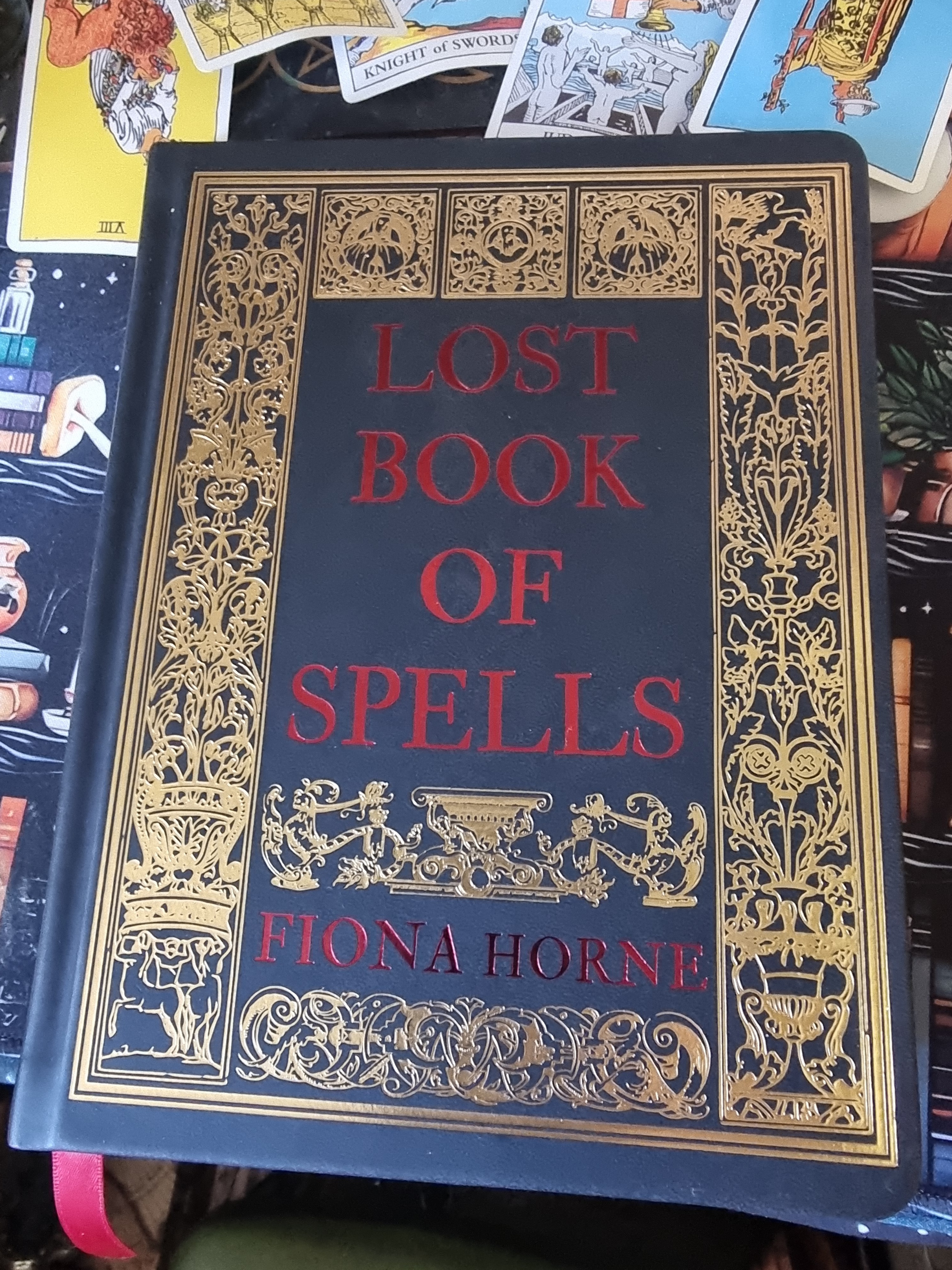
Oh I am so I came across the 52nd book club been waiting a while so share my witchy read with you all so here it is:

So far it is amazing from the layout, spells and more. I have a few spell books now and always cringe when wanting to buy another thinking it will be same-old-same-old, but this one is great! Just to clarify, although the title suggests it is a lost book of spells, they are not ancient one just some spells the author has thought lost way back when computers were boxy, but there are many spells I haven’t heard before and the ingredients so far are not rare.to find so it is perfect for me :blush::heart:

7 Likes

I finished! Yay!

Book Title and Author: Samhain: The Roots of Halloween by Luke Eastwood

Status? : Finished

My overall rating of the book : 4/10

How does this book relate to my magickal practice?: I am always on the lookout for books on how to celebrate the different times of the year and Pagan holidays.

My personal thoughts/opinions: This book started out promising, but then went downhill quickly, sad to say. I was looking for the history of Samhain, and the different practices in Ireland, and what I got was a history of a site in Ireland called Tlachtga. Which, yes, was important to the Samhain rites in Ireland, but the history of it got a bit confusing to me and I couldn’t see how it all connected.

Although, I’m terrible at absorbing history in the written form like this, so I don’t know if it was me or the book, but I’m pretty sure it was the book.

An interesting quote from the book: “In Ireland the world view was threefold but somewhat different from the modern religious view of Heaven–Earth–Hell. The Irish (and Welsh) pagans believed in three realms – the upperworld (Sky), middleworld (Earth) and otherworld (Sea). The upperworld was the realm of the gods and also spirits that we might liken to angels and demons. The middleworld was the realm of physical existence where we live out our everyday lives. The otherworld was the realm of the dead and also the sidhe/aos sĂ­ (fairies and Tuatha DĂ© Danann). Strictly speaking, the realm of the dead was not under the sea but beyond the horizon in the west, where the sun sets.”

Eastwood, Luke. Samhain: The Roots of Halloween (p. 20). THP Ireland. Kindle Edition.

All in all, would I recommend this book?: No

8 Likes

I just finished the other day!

Book Title and Author: The Witch of the Forest’s Guide to Folklore Magic by Lindsay Squire

Status? : Finished

My overall rating of the book : 7/10

How does this book relate to my magickal practice?: I want to get more into folklore and Appalachian magic, because that’s the type of magic from the area I live in.

My personal thoughts/opinions: This is an interesting book. It reads like an encyclopedia and would be great for a witch who is starting. It had detailed instructions on how to make teas, liniments, and tinctures, just to name a few ways of using herbs. That being said, I was hoping for more than just an encyclopedia of herbs and flowers. I wanted something on what Folk Magicians do.

An interesting quote from the book: "Chamomile has a wide variety of magickal properties, including prosperity, protection, peace, blessings, dreamwork, attracting money, beauty, honouring the sun, and purification. In medieval folklore, chamomile was placed near doors to protect against bad luck, as it acts as a guardian herb spirit when planted, which serves to protect your home against ill will and intent.”

All in all, would I recommend this book?: Yes

6 Likes

I finished mine and it was great!

Book Title and Author: The Witch’s Book of Spellcraft by Jason Mankey, Matt Cavalli, Amanda Lynn, and Ari Mankey

Status? : Finished

My overall rating of the book : 11/10!

How does this book relate to my magickal practice?: I went into reading this knowing it’s pretty much a beginner book, but I wanted to see if it had anything new for me.

My personal thoughts/opinions: THIS IS A GREAT BOOK! Seriously, I would recommend it to every new witch or someone just wanted to go back to the basics! It’s very easy to read, easy to follow, despite having so many author’s. Seriously, we need to put this on the page for people looking for beginner books, because it was awesome!

An interesting quote from the book: “Like attracts like” is such a powerful magickal adage that its end results can be seen in the real world. If someone is completely miserable all the time, it’s likely that the people they associate with are also constantly miserable. On the opposite end of the spectrum, positive people tend to find positive people to hang out with.”

Mankey, Jason; Cavalli, Matt; Lynn, Amanda; Mankey, Ari. The Witch’s Book of Spellcraft: A Practical Guide to Connecting with the Magick of Candles, Crystals, Plants & Herbs (pp. 12-13). Llewellyn Publications. Kindle Edition.

All in all, would I recommend this book?: YES!

6 Likes

Book Title and Author: The Druid Path by John Michael Greer

Status: Still Reading

My overall rating of the book: 9/10

How does this book relate to my magickal practice: For my own magickal practice, A Druid Path feels deeply relevant because it grounds everything I already do—tarot, runes, ancestor work, nature magick, and shadow healing—in a clear, earth-centered framework. Greer’s focus on nature, seasonal awareness, and the Three Realms (Land, Sea, and Sky) strengthens the way I interpret signs, energy, and divination. His non-dogmatic, animistic approach also supports the blend of Celtic/Norse ancestry, intuitive witchcraft, and personal spirituality I’m building. The Bardic, Ovate, and Druid paths mirror the creative work I do with tarot and writing, the healing and shadow work I’m navigating, and the mindful foundation I want in my spell work. Overall, the book gives me structure and grounding while leaving room for personal expression, making it a natural fit for my spiritual path.

My personal thoughts/opinions: In the first four chapters of A Druid Path, I reflect on what drew me to modern Druidry—a gentle but persistent call to reconnect with nature, meaning, and a more grounded way of living. Greer explains that today’s Druidry isn’t a rigid ancient religion, but a revived, flexible spiritual path built on creativity (Bardic), intuition and healing (Ovatic), and philosophy and ritual (Druidic). As I explore the path, I learn to release stereotypes and instead focus on forming a living relationship with the natural world—paying attention to the land, seasons, and the subtle rhythms around me. Greer introduces the Three Realms of Land, Sea, and Sky, which symbolize physical life, emotional/spiritual flow, and inspiration. Together, these chapters helped me see Druidry as a balanced, experiential practice that invites presence, awareness, and personal connection to the world.

An interesting quote from the book: “Druidry is not a matter of believing certain things, but of doing certain things—of following a path shaped by nature, awareness, and personal experience.”
— John Michael Greer, A Druid Path, early chapters

All in all, would I recommend this book: Yes! I plan on continuing this book in next month’s Book Club session!

4 Likes

Book Title and Author: A Druid Path by John Michael Greer

Status? Finished

My overall rating of the book: 8/10

Pros

  • Grounded, calm, and practical approach to spirituality

  • Encourages personal experience over belief

  • Flexible and inclusive of blended paths and ancestry

  • Strengthens daily practice, not just ritual moments

  • Excellent framework for nature-based magick and divination

Cons

  • Very gentle pace—can feel slow if you want dramatic ritual work

  • Less mythic storytelling than some may expect

  • Assumes patience and long-term commitment

  • Readers wanting strict spell formulas may feel underwhelmed

How does this book relate to my magickal practice?

This book strengthened my magick by slowing it down and rooting it deeper. It helped me move away from performing spells or divination in isolation and instead see my tarot, runes, ancestor work, and seasonal rituals as part of an ongoing relationship with place, body, emotion, and spirit. The Three Realms framework sharpened how I interpret energy—grounding my work (Land), honoring intuition and shadow (Sea), and clarifying intention and insight (Sky). The Druid path mirrors the balance I already seek between creativity, healing, and wisdom, while Greer’s emphasis on discipline and observation gave my practice more steadiness and less pressure to “get it right.” This book didn’t change my path—it gave it bones.

My personal thoughts/opinions:

By the time I finished A Druid Path, I realized this book didn’t try to make me believe anything new. Instead, it quietly taught me how to pay attention. Greer walks me through modern Druidry not as a fixed religion or fantasy reconstruction, but as a practical, living path rooted in awareness, balance, and relationship with the world around me. As the chapters unfold, I’m guided from curiosity into practice—learning how observation, seasonal rhythm, meditation, ritual structure, ethics, and symbolism all weave together into a grounded spiritual life.

What stood out most was how much responsibility the path places back in my hands. There’s no hierarchy demanding devotion, no dogma insisting on certainty. Druidry here is experiential. I’m encouraged to watch the land where I live, track cycles, work with the Three Realms of Land, Sea, and Sky, and slowly develop a personal spiritual discipline shaped by consistency rather than intensity. By the end of the book, Druidry feels less like something I do occasionally and more like a lens through which I live, notice, and engage the world.

An interesting quote from the book:

“Druidry is a path of practice rather than belief; its truths are found by walking it.”
— John Michael Greer, A Druid Path

All in all, would I recommend this book? Yes

4 Likes