Merry meet!
Have you ever heard the word ikigai ? You may have heard it mentioned or seen the popular “ikigai diagram” spreading around social media. If not, well, pour yourself a brew and pull up a chair - it’s time to explore! 
What is Ikigai ?
Ikigai is a Japanese concept that, like wabi-sabi, is deeply intertwined in Japanese culture and is difficult to translate. Many people believe the core essence of ikigai is about finding the self. For those new to the term, you can think of ikigai as the concept of finding your life’s meaning through embracing your true self.
Ikigai (生き甲斐, ‘a reason for being’) is a Japanese concept of an individual’s definition of the meaning of their life.
Ikigai can be having a sense of purpose in life, as well as being a source of motivation. According to a study by Michiko Kumano, feeling ikigai as described in Japanese is usually the sense of accomplishment and fulfillment that follows when people pursue their passions.
From Wikipedia: Ikigai
Ikigai exploded in popularity and has become a hot trend on the internet. If you’ve seen it, you’ve probably seen it pictured with a Venn Diagram. Here’s one version of it:

The idea of the diagram is to show how different areas of your life (what you’re good at, what you love, what the world needs, and what you can be paid for) overlap, and at the center of all of these things is your “purpose”.
A note that the diagram that folks often share for ikigai is an adaptation of an earlier diagram about finding one’s life purpose: the Zuzunaga Diagram of Purpose by Spanish psychologist and astrologist Andrés Zuzunaga. At some point the term ikigai was incorporated with this diagram as a replacement for the term purpose.
Some people feel that the Zuzunaga Diagram of Purpose does not properly portray the meaning of ikigai, while others find the diagram is helpful for understanding the general concept of finding meaningful direction in one’s life.
In response to the recent popularity of ikigai, there has been a trend among Japanese creators to separate this new “four-rule-ikigai” depicted in the Venn diagram from “true ikigai”. Unlike the “four-rule-ikigai” which is often simplified and goal-focused, they discuss a “true ikigai” that is portrayed as being deeper, more holistic, and more spiritual - but also harder to define in words.
This video by Japanese YouTuber Zen to Manabi explores the concept of “true ikigai” in more detail:
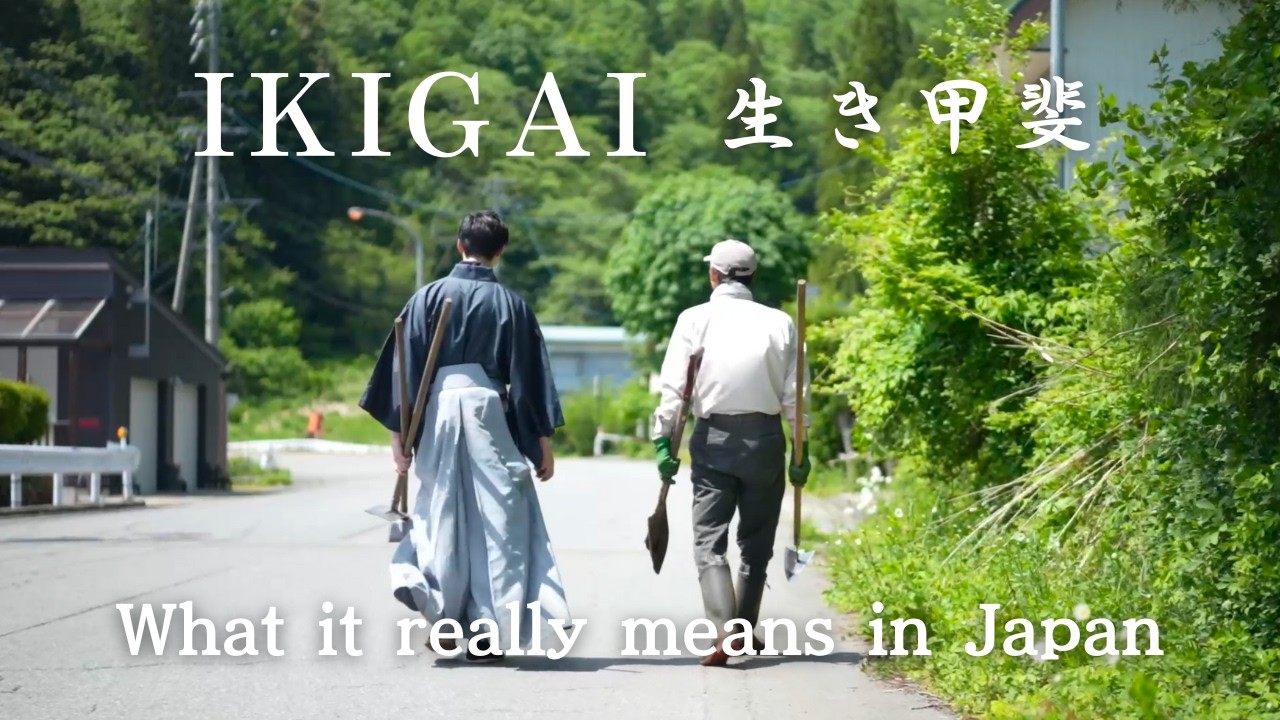
Both the “four-rule-ikigai” and “true ikigai” are interesting (and valid, at least in my eyes!) concepts. Some may prefer the more modernized and easily digestible Venn diagram version of ikigai that has four clear goals, while others may resonate with the deeper and more culturally-entwined version of ikigai.
Whatever your experience and thoughts about ikigai, I encourage you to explore it more!
On that note, here is a tarot spread I designed with ikigai as inspiration. As with all magick, intention is important, so I encourage you to consider your personal definition of ikigai and clearly define your goals before reading. You may choose to use this spread to help you find a meaningful and rewarding career in modern society, look for a path toward a wholesome and connected life, or other such intentions. Please feel free to use/adapt this spread in your reading practice if you feel called to do so.
Ikigai Tarot Spread

 Mind card: What you are good at
 Heart card: What you love
 Hand card: What the world needs (that you can offer)
 Feet card: What can support you (monetarily, tangibly, emotionally, or otherwise)
 Action card: How to find your ikigai
What are your thoughts about ikigai ? Do you find the concept confusing or helpful? Do you think you’ve found your ikigai ?
Blessed be! 

 I wish you good luck with your studies and I hope that if you give the spread a try it will be helpful for you. Blessed be!
 But I will definitely try the tarot spread and see if I can get new insights!


 It makes me wonder about doing a double reading, and seeing if any cards appear in both spreads (perhaps in the same spots?). That would be pretty neat!


 [another difficult one] strangely enough, how true!! The whole of me IS a solitary person. I have always loved my own company and books are my best friends. I love learning about other cultures and religions [degree in history], contemplation. If food, electricity and plumbing were not an issue, I would be happy “all by my lonesome”.
 I think they appreciate divining about different topics!